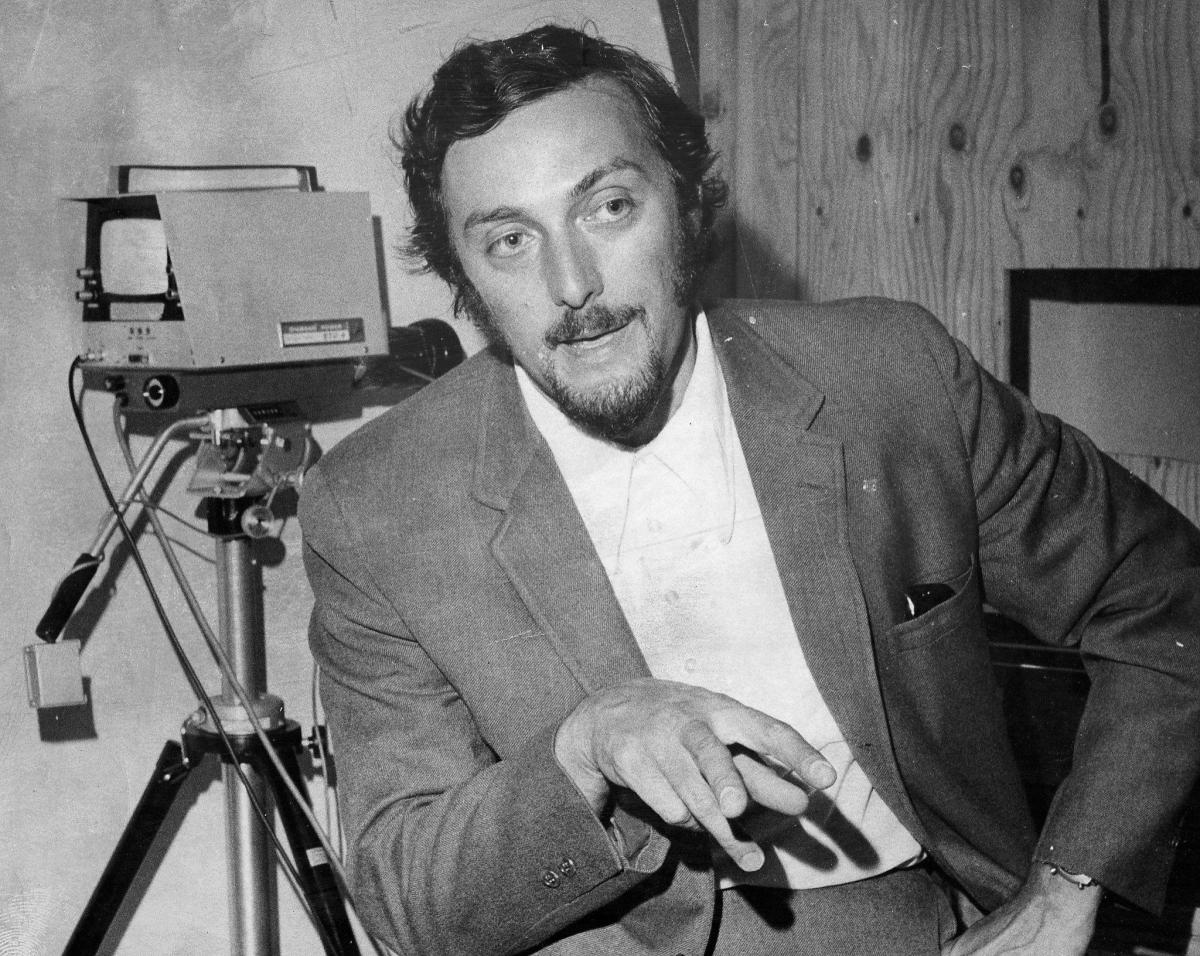
Growing up in the inner-city ghetto of New York City, Phillip Zimbardo was not destined to change the way we think about power, psychology, or evil, however his findings sent a shock around the world and set the precedent for modern psychological experiments today. In his works, Zimbardo tested the power of authority and how a simple uniform can turn good into evil. The Stanford Prison Experiment, which was supposed to be two “boring” weeks, only lasted six days in the basement of Stanford’s Psychology Department building. This experiment exposed how the power of authority can take complete control and can turn even the most kindhearted humans into sadistic beings. Although this demonstration took place in 1971 it is all the more relevant today because it exemplifies what is happening in current prisons in the United States and around the world. Made up of elite college students with no criminal background, the Stanford County Prison was a glimpse of modern prisons. The fact that this simulation prison had such intense impacts on the mental health of these young men shows the terrifying reality that the power of authority can wield. The guards and prisoners of this experiment were determined by a coin flip which is astonishing because the guards became sadistic while the prisoners were stripped of their identity and we’re not treated as human beings.
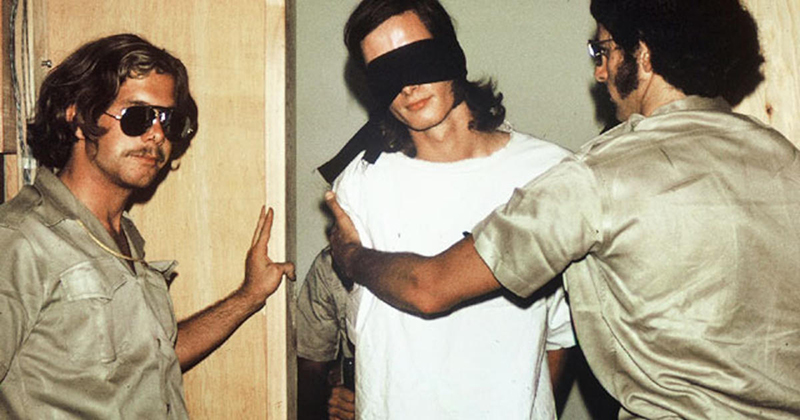
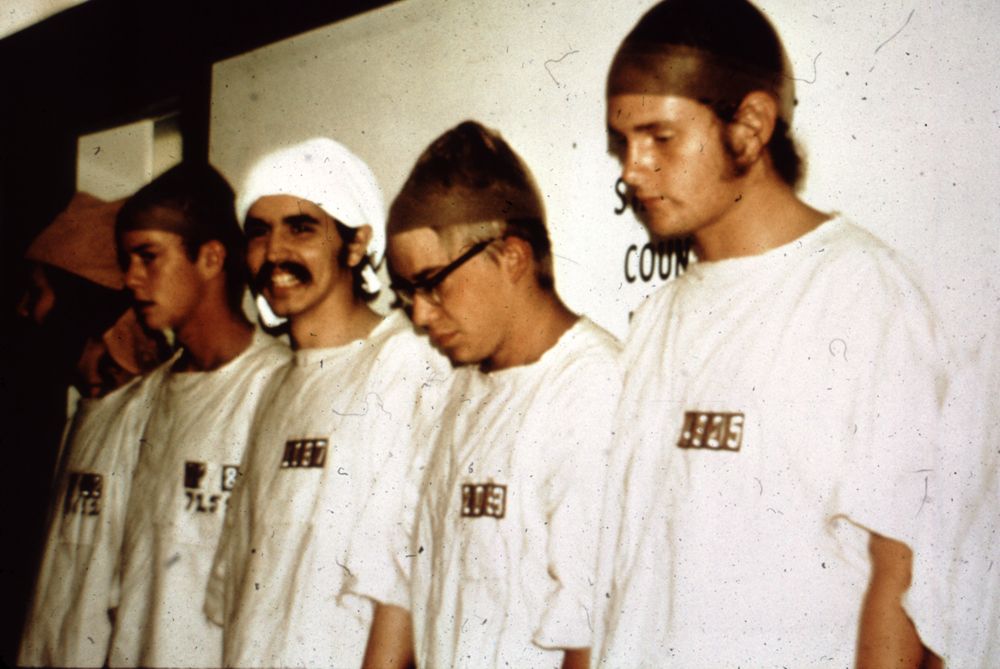
The Stanford Prison Experiment took place in the summer of 1971 in the basement of Jordan Hall at Stanford University. An ad was put in the newspaper looking for students who were willing to participate in a study regarding the psychological effects of a prison. Over 70 applicants were asked a series of questions to determine that they were healthy and menatlly stable which were then narrowed down to 24 young men who were randomly assigned the role of a “prison guard” or “prisoner”. The incentive was fifteen dollars a day for their participation, but after the study had begun, many were willing to forfeit their pay to be able to leave the depths of the simulation. The study began with the “prisoners” being arrested outside of their homes by real officers in authentic police cars. The moment that these men were aggressively shoved with their hands on top of the vehicle, they realized this experiment was not going to be “rainbows and unicorns”. After being blindfolded and led to the basement of Jordan Hall, stripped down naked, sprayed with disinfectant, and dressed in a gown adorned with various numbers, the prisoners were stripped of their identity. Meanwhile, the guards were fitted with a khaki uniform, mirrored aviators, and a baton, making them assume the identities of their new role of power. The use of the ID numbers was necessary in order for the prisoners to understand that this was their new identity, and the dress took away all masculinity, thus stripping the prisoners of their previous identity entirely. A series of “counts” were performed at various times of the day and throughout the night in which the prisoners had to scream their ID number. These counts also gave the guards a reason to assert dominance over the prisoners and slowly break them down. After only one day, prisoners decided to rebel by removing the numbers on their gowns, taking their caps off, and placing their mattresses to deny entry to their cells, making the guards feel out of control. After this incident, the guards became furious and made all of the prisoners strip naked, removing their beds and blankets, and humiliating them. One of the cells cooperated and in turn they were given special privileges including a special meal and the ability to brush their teeth. One prisoner began experiencing emotional disturbances and attempted to leave the experiment, but was told to be tough and think about it. After telling the rest of the prisoners that he tried to leave and was unable to, that instilled fear in the remaining prisoners and they began thinking of the experiment as real life rather than a simulation. There was also a visiting day which allowed loved ones of the prisoners to visit the facility, however it was manipulated because the young men were cleaned up and well fed before the visitors came. Parents became concerned about the well being of their sons and Zimbardo turned their concerns into a matter of manliness. He played with the masculinity of the fathers saying things such as “your boy is tough isn’t he?” which led the parents to feel embarrassed and stop asking questions about the study. The guards completely absorbed their role and demoralized the prisoners, completely violating the contract they previously signed and once in total control, fully abused the prisoners. The Stanford Prison Experiment was finally terminated after six days when it was intended to last two weeks. Zimbardo fully immersed himself into his created role of the warden and was so intoxicated with this role that he was not aware of the destruction he was placing on these young boys and it eventually took outside opinions to make him realize how absorbed he actually was. This experiment is still relevant because it sheds light on our modern day prisons and gave a glimpse into the harms of the power of authority, as well as set a precedent for the regulations of experiments regarding ethics.
Following the harsh backlash he received after the Stanford Prison Study, Phillip Zimbardo began studying the term evil and wrote “The Lucifer Effect”. The Lucifer Effect is the notion that good people can turn evil with “a perfect storm” of events. “The Lucifer Effect raises a fundamental question about the nature of human nature: How is it possible for ordinary, average, even good people to become perpetrators of evil? In trying to understand unusual, or aberrant behavior, we often err in focusing exclusively on the inner determinants of genes, personality, and character, as we also tend to ignore what may be the critical catalyst for behavior change in the external Situation or in the System that creates and maintains such situations. I challenge readers to reflect on how well they really know themselves, and how much confidence they have in what they would or would not ever do when put into new behavioral settings” (Phillip Zimbardo, The Lucifer Effect). The reason why the Stanford Prison Experiment was so hard to grasp was because it assured this idea that a “normal” person could turn into a terrible person, showing that they were capable of being evil. Zimbardo tours around the world spreading his findings on the human psyche regarding the power of authority. He has also published a number of introductory psychology books. I believe that he was not aware of the lengths people would go to assert their dominance, including his own role, and has used his findings to educate people.
When I first heard of the Stanford Prison Experiment, I was so interested but also extremely disgusted at the idea that the power of authority could be used to completely demolish one’s identity. How could someone like Zimbardo think the way he did, and how could he be okay with the fact that he caused so much harm to these young men? Growing up in the Bronx, Zimbardo was often ridiculed for not being wealthy and was racially profiled for being Italian, and often mistaken for Jewish or Latino which led him to be curious about how humans act. I believe that if it weren’t for the mental abuse and ridicule he endured as a child, he would not have been so driven to understand human nature and psychology. He is a public intellectual despite the unethical experiment he crafted. “One, the fact that academic institutions wield enormous financial, technological, and cultural power—and the fact that, more generally, education continues to be the centerpiece of some of our most cherished social myths (i.e., “the “American Dream”)—are both powerful reasons to doubt that Americans suffer from some instinctive hostility to intellectuals. Two, what is sometimes identified as anti-intellectualism is in fact intellectual—that is, a well articulated family of ideas and arguments that privilege the practical, active side of life (e.g., work) over the passive and purely reflective operations of the mind in a vacuum.” (Mack, Are Public Intellectuals a thing of the Past) In conjunction with Stephen Mack’s ideas, Phillip Zimbardo was seen as an esteemed professor and because he assumed this role as a warden of the prison, he became feared and lost some of his respect from the students who participated in the study. These educated young men were interested in volunteering for this experiment because of Zimbardo’s work and intelligence; however once he became this dictator, many people in the experiment, as well as fellow psychologists and outsiders, became hostile towards Zimbardo.
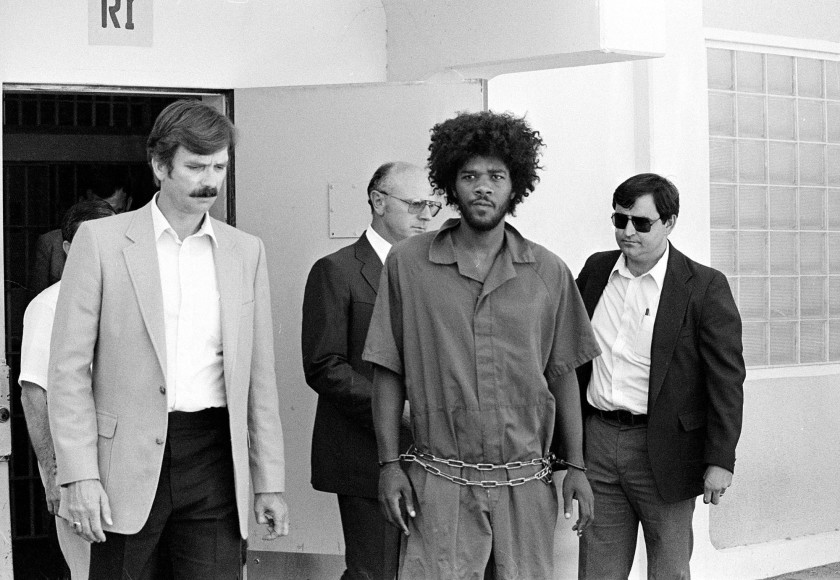

I had the opportunity to listen to a phone call with Kevin Cooper, who is on Death Row at California’s San Quentin Prison. To read more about Kevin Cooper’s situation click here. After a short introduction, Cooper stated, “I am a modern day slave”. He described how oppression is worse than the grave and how he has seen the ugly side of America for the past 35 years. He explained how the system has tortured him mentally, physically, and spiritually, also including how the conditions are subhuman. Cooper discussed how the guards want nothing more than to take away his individualism which was what Zimbardo wanted to do with his prisoners in the experiment. Many people that are involved in the Prison Industrial Complex would say that the relationship between the police, courts, and the conditions in prisons in the 1970’s and today are not very different, which is why Zimbardo’s work is so relevant. In mass incarceration, there is this notion that you are allowed to treat prisoners as subhuman because they have commited a crime, as if being in the conditions that they are isn’t enough. After listening to the voice of a man who has seen the ugliest side of humanity, I couldn’t help but think of Phillip Zimbardo’s work. Despite how much criticism he endured after the experiment, nothing has changed. It was extremely unsettling and disturbing to read and watch the events from the Stanford Prison Experiment, however that study was nothing compared to what is happening in real prisons today. Phillip Zimbardo shed light on the power of authority and continues to educate people on his findings, but nothing seems to be changing. It is so easy to turn a blind eye to the reality of these horrific events and the inhumane acts those in power are capable of committing, however it is important to be educated in order to make a lasting difference.
 my thoughts & some mumbo jumbo
3 replies on “The Power of Authority: Phillip Zimbardo the Public Intellectual”
I found this to be quite intriguing. The psychology of power is one that could be endlessly explored. Side note, have you seen any of the documentaries or fictionalized movies based on the experiment?
LikeLike
Yes, I recommend the movie on netflix! It is very accurate!
LikeLike
Excellent post!
LikeLike