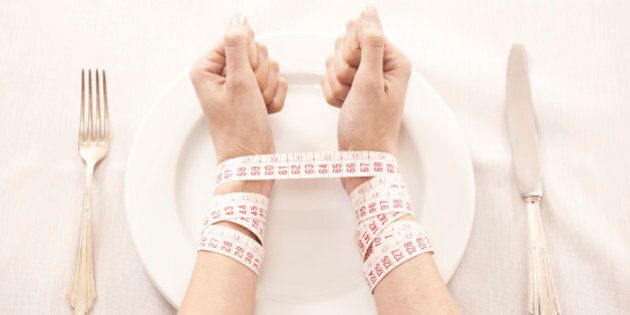
What’s the first thing you do in the morning? Check your phone. And the last thing you do before sleeping? Check your phone. We are constantly absorbing various forms of media including “perfect” selfies from Instagram’s finest. Constantly scrolling can lead to constant comparing to something that is not attainable. This perfect idealized body is constructed from models on TV to content creators on apps like Instagram. Despite all of this constant new information and self-refreshing news feeds, the media is not doing its job in educating the public on eating disorders and it is fueling the fire that can lead to disordered thinking about food and eating disorders. Because social media applications like Instagram focus mainly on one’s appearance, it is creating an unattainable idealized body type that is contributing to the increase of disordered thinking about food and eating disorders. It is necessary to change the conversation about eating disorders and their prevalence in order to express the severity of these diseases.
When you think about eating disorders, what comes to mind? For me, it is a very graphic image of skin and bones that I learned about in 7thgrade health class. I see someone so emancipated, however that is not always the case, and often not the case at all. There is this sigma and stereotype of what eating disorders should look like, so because of that, people find it hard to notice and identify them. Because someone looks “healthy” that does not mean they do not have an eating disorder. We have this image of what we think someone will look like, so we assume someone who is not skin and bones is healthy. Right? In order to identify eating disorders, it is important to be educated on them.
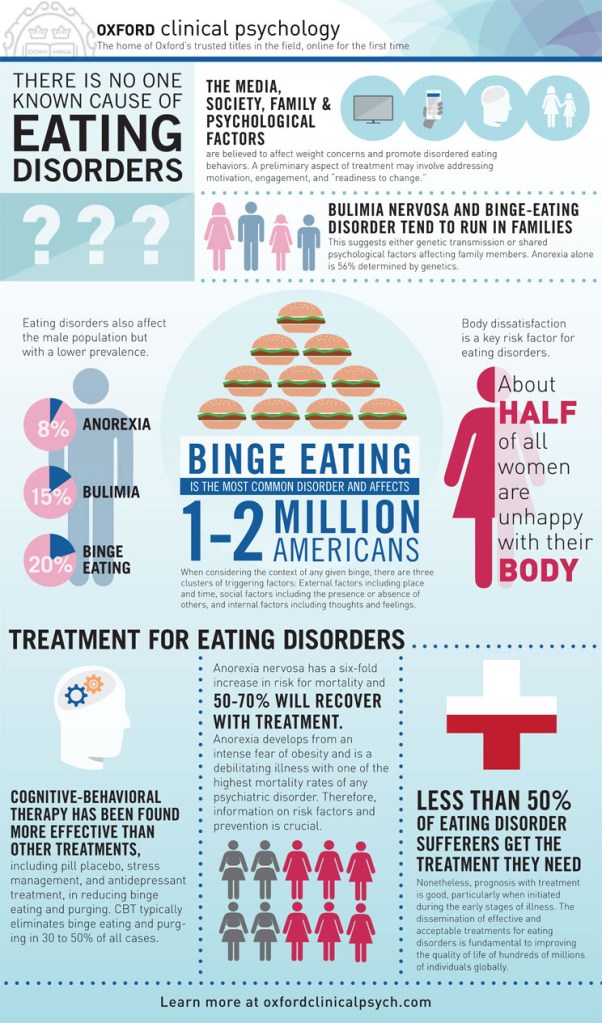
Anorexia nervosa is an eating disorder characterized by intense fear of gaining weight, distorted body image, and symptoms generally include trying to maintain a below-normal weight through starvation or too much exercise. With anorexia, like some other eating disorders, being thin is associated with self-worth. It is not just a physical disorder, it is a psychological disorder that affects all aspects of one’s life, not just their appearance. NEDA’s website alludes to the idea that anorexia does not just affect those who seem to be thin, it affects people of all sizes and from all backgrounds, “Anorexia can affect people of all ages, genders, sexual orientations, races, and ethnicities. Historians and psychologists have found evidence of people displaying symptoms of anorexia for hundreds or thousands of years. Although the disorder most frequently begins during adolescence, an increasing number of children and older adults are also being diagnosed with anorexia. You cannot tell if a person is struggling with anorexia by looking at them. A person does not need to be emaciated or underweight to be struggling. Studies have found that larger-bodied individuals can also have anorexia, although they may be less likely to be diagnosed due to cultural prejudice against fat and obesity” (nationaleatingdisorders.org) NEDA is working in an effort to remove the stigma of eating disorders such as anorexia nervosa. Some of the physical warning symptoms include: dramatic weight loss, dresses in layers to hide weight loss or stay warm, is preoccupied with weight, food, calories, fat grams, and dieting, refuses to eat certain foods, progressing to restrictions against whole categories of food (e.g., no carbohydrates, etc.), makes frequent comments about feeling “fat” or overweight despite weight loss, complains of constipation, abdominal pain, cold intolerance, lethargy, and/or excess energy, etc.
Bulimia nervosa is an eating disorder in which is identified by binging usually followed by purging. People with this condition binge eat then take steps to avoid weight gain. Most commonly, this means vomiting (purging). But it can also mean excessive exercising or fasting. This could mean that one has secret recurring episodes of binge eating (eating in a discrete period of time an amount of food that is much larger than most individuals would eat under similar circumstances); feels lack of control over ability to stop eating and/or purges after a binge (e.g. self-induced vomiting, abuse of laxatives, diet pills and/or diuretics, excessive exercise, fasting). “Some people with bulimia are overweight or obese and may attempt to use purging to manage their weight or to prevent additional weight gain. Bulimia nervosa is a serious mental illness that requires intensive treatment.” (Bulimia.com)
Orthorexia nervosa is an eating disorder that is centered around the obsession of healthy eating. “Unlike other eating disorders, orthorexia mostly revolves around food quality — not quantity. People with orthorexia are generally not focused on losing weight. Instead, they have an extreme fixation with the purity of their foods, as well as an obsession with the benefits of healthy eating.A few years ago, orthorexia was in the media spotlight because of Jordan Younger, a successful blogger with more than 70,000 Instagram followers. She shocked everyone by describing how her motivation to eat healthy became obsessive to the point of malnutrition” (healthline.com)
Instagram and various social media platforms are filled with “foodies” who inspire all of us to cook healthy recipes at home from smoothie bowls to cauliflower pizza. These food and health accounts are so common and popular, that it absorbs many people’s lives and ways they think about food. When one sees these food accounts it is common sense to compare your eating habits to those of the person on the other side of the screen. Personally, I do not have the time or money to have a mini Whole Foods in my college apartment, like many others. Orthorexia is an eating disorder that is very common because of social media platforms and Jordan Younger set an example by revealing her truth, however it is more common in those who are financially stable and have the means to purchase healthy foods. This makes a statement about the society we live in…is it not possible to be healthy when one does not have the means to afford it? Low-income families often rely on fast-food restaurants because of their price, making it virtually impossible to have adequate nutrition because grocery stores like Whole Foods benefit on increasing the prices of organic foods. Orthorexia is a fairly new eating disorder and is just as serious as the others.
In a study conducted by Pixie G. Turner and Carmen E. Lefevre explored the connection between social media and eating disorders. They looked at various food and health accounts and studied the eating habits as well as health habits that coincided with those social media accounts. “Social media use is ever increasing amongst young adults and has previously been shown to have negative effects on body image, depression, social comparison, and disordered eating. One eating disorder of interest in this context is orthorexia nervosa, an obsession with eating healthily. High orthorexia nervosa prevalence has been found in populations who take an active interest in their health and body and is frequently comorbid with anorexia nervosa. Here, we investigate links between social media use, in particularly Instagram and orthorexia nervosa symptoms.” After conducting the experiment, they found that [their] results suggest “that the healthy eating community on Instagram has a high prevalence of orthorexia symptoms, with higher Instagram use being linked to increased symptoms. These findings highlight the implications social media can have on psychological wellbeing, and the influence social media ‘celebrities’ may have over hundreds of thousands of individuals. These results may also have clinical implications for eating disorder development and recovery.”
The average model weighs 113 pounds, which is 23% less than the average. We are constantly absorbing media from outlets that project an unrealistic body image and weight. Not to mention the use of applications like Photoshop to remove all “imperfections” on the body. Because of society’s needs to advertise an unrealistic body type and weight, it heightens the desire to change one’s body type and appearance. Bridget Malcom revealed how her time in the modeling industry impacted her severe anxiety and eating disorders. It is also important to acknowledge the people behind the posts of perfection. As much as it is difficult to constantly compare oneself to these influencers and celebrities, it is just as crucial to check in on the people behind the screen.
Tik Tok is taking over the social media world with videos going viral every second. Tik Tok content varies from lip-sync dances to comedy skits, in which users can borrow various sounds or create their own. Similar to other platforms, many of Tik Toks influencers show off their body and create an unhealthy motivation to gain followers. Also, many of the “Hype House” crew comprised of Tik Tok influencers, are teenagers. What kind of example is this setting for teenagers across the country? Tik Tok is also home to the “EaTiNg DiSoRdEr ChEcK” sound, in which users have this playing in the background as they reveal their personal struggles with eating disorders or simply use it as a joke and show off their body. This soundbite is both helpful and harmful. It can be a trigger for many people who have struggled with eating disorders, or it can be inspiration for recovery. People have used this sound to show them in the peak of their eating disorder or to spread awareness and express their recovery story. Videos like these also romanticize eating disorders and when they receive a lot of views, it is an incentive or even a “how-to” for disordered eating. Tik Tok has updated its policy for when someone searches various hashtags that involve disordered eating, it sends them to a “help and resources” page. In this way, Tik Tok has tried to stop the spread of pro-eating disorder posts, however this does not mean that the content is not still accessible. Just because the hashtags are unavailable, Tik Tok has an algorithm which will promt these types of videos if one has watched a couple videos on the topic. I think that Tik Tok, along with many other platforms can be used for both awareness and harmfulness, and it is the responsibility of the media to monitor this.
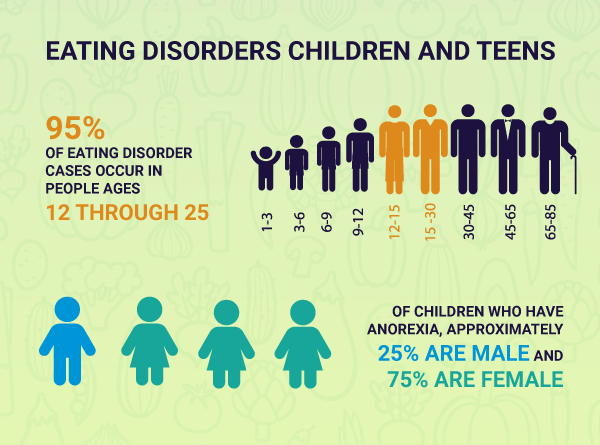
Eating disorders do not discriminate. They affect all races, genders, ethnicities, and cultures. There is this notion that eating disorders are only when someone is unhealthy thin, and usually a woman. This is not the case. Just because someone isn’t extremely skinny, does not mean they are not struggling with a disorder. Also, although not as prevalent in the media, men also struggle with eating disorders.According to NEDA, “Despite the stereotype that eating disorders only occur in women, about one in three people struggling with an eating disorder is male, and subclinical eating disordered behaviors” which is not portrayed in the media at all. In the United States alone, eating disorders will affect 10 million males at some point in their lives, “but due in large part to cultural bias, they are much less likely to seek treatment for their eating disorder.” Because there is a stereotype of what men should look like, muscular, fit, etc. it is a driving force in men’s’ eating disorders. There are numerous studies on male body image, and results vary widely. Many men have misconceived notions about their weight and physique, particularly the importance of muscularity. Findings include: “Most males would like to be lean and muscular, which typically represents the “ideal” male body type. Exposure to unattainable images in the media leads to male body dissatisfaction.” Just like the ideal body that we see in the media for women, there is an idealized body type for men as well. Magazines, television, and social media project images all of which the men have perfect six packs, which is not realistic, and a lot of the times edited. We need to change the conversation about what eating disorders are, and who they affect.
In a study regarding the impact of the media on eating disorders in children and adolescents, Anne Morris and Deborah Katzman explained how children are more susceptible to be manipulated by what they see on the media. “The literature confirms that children and adolescents are particularly vulnerable to messages and images conveyed through the mass media. Many children and adolescents cannot discriminate between what they see and what is real. For instance, young people are often unaware that digital technology and manipulation in the fashion industry use air brush and digital enhancement to portray the ‘ideal’ female and male body. These images promote unrealistic standards that are impossible to achieve.” (PMC) It is important to acknowledge that children are easily manipulated with whatever topic they are absorbing, however today there is a large amount of information regarding health and body image which contributes to disordered eating in adolescents.
Eating disorders and disordered thinking about food are extremely serious and should not be taken lightly or romanticized through the media. These are very intense and dangerous physical and psychological disorders that can fully damage one’s body permanently. It is important to change the conversation about eating disorders and spark the truth that they are happening all around us at different extents. No one eating disorder is worse than the other or more important than the next, each is harmful and needs treatment and support for recovery. We need to stop being afraid to discuss topics like eating disorders because without conversation, people will not get help.
It is so important to be educated on eating disorders so that one can be aware of the signs and help a friend or loved one. It is also crucial to be aware of how media plays a role in the contribution to the formation of eating disorders. Applications like Instagram and Tik Tok, along with other news outlets like magazines and television should be held accountable for the content that fills various news feeds. We also need to change the stereotypes of what the “ideal” body shape is and realize that everyone is beautiful and appreciated. Let us take this information and continue the conversation about eating disorders and mental health in general and help each other.
If you or a loved one is suffering from and eating disorder or disordered thinking, please call the hotline at (800) 931-2237 or go to https://www.nationaleatingdisorders.org/help-support/contact-helplinefor more information about how to get help.
Works Cited
“Anorexia Nervosa.” Mayo Clinic, Mayo Foundation for Medical Education and Research, 20 Feb. 2018, http://www.mayoclinic.org/diseases-conditions/anorexia-nervosa/symptoms-causes/syc-20353591.
“Contact the Helpline.” National Eating Disorders Association, 24 Jan. 2020, http://www.nationaleatingdisorders.org/help-support/contact-helpline.
Eating Disorder Help, http://www.mirror-mirror.org/body-image-in-the-media.htm.
“Eating Disorders in Men & Boys.” National Eating Disorders Association, 26 Feb. 2018, http://www.nationaleatingdisorders.org/learn/general-information/research-on-males.
“Find the Best Bulimia Treatment Programs and Dual Diagnosis Rehabs.” Bulimia.com, http://www.bulimia.com/topics/bulimia/.
Gordon, Kathryn H., et al. “The Impact of Racial Stereotypes on Eating Disorder Recognition.” Wiley Online Library, John Wiley & Sons, Ltd, 18 July 2002, onlinelibrary.wiley.com/doi/abs/10.1002/eat.10070.
Hern, Alex. “TikTok ‘Tried to Filter out Videos from Ugly, Poor or Disabled Users’.” The Guardian, Guardian News and Media, 17 Mar. 2020, http://www.theguardian.com/technology/2020/mar/17/tiktok-tried-to-filter-out-videos-from-ugly-poor-or-disabled-users.
Malcolm, Bridget. “This Victoria’s Secret Model Wants You to Stop Trying to Look Like Her.” Harper’s BAZAAR, 20 June 2018, http://www.harpersbazaar.com/culture/features/a21207343/bridget-malcolm-eating-disorder-anxiety/.
Morris, Anne M, and Debra K Katzman. “The Impact of the Media on Eating Disorders in Children and Adolescents.” Paediatrics & Child Health, vol. 8, no. 5, Jan. 2003, pp. 287–289., doi:10.1093/pch/8.5.287.
“Orthorexia.” National Eating Disorders Association, 13 Dec. 2019, http://www.nationaleatingdisorders.org/learn/by-eating-disorder/other/orthorexia.
Preventing Eating Disorders, http://www.nedc.com.au/eating-disorders/prevention/preventing-eating-disorders/what-to-look-for/.
Salafia, Elizabeth H. Blodgett, et al. “Perceptions of the Causes of Eating Disorders: a Comparison of Individuals with and without Eating Disorders.” Journal of Eating Disorders, vol. 3, no. 1, 2015, doi:10.1186/s40337-015-0069-8.
Spettigue, Wendy, and Katherine A Henderson. “Eating Disorders and the Role of the Media.” The Canadian Child and Adolescent Psychiatry Review = La Revue Canadienne De Psychiatrie De L’enfant Et De L’adolescent, Canadian Academy of Child and Adolescent Psychiatry, Feb. 2004, http://www.ncbi.nlm.nih.gov/pmc/articles/PMC2533817/.
Turner, Pixie G., and Carmen E. Lefevre. “Instagram Use Is Linked to Increased Symptoms of Orthorexia Nervosa.” Eating and Weight Disorders – Studies on Anorexia, Bulimia and Obesity, vol. 22, no. 2, Jan. 2017, pp. 277–284., doi:10.1007/s40519-017-0364-2.
Wilson, Cameron. “TikTok Is Filled With Pro-Eating Disorder Content, Despite Its Own Rules.” BuzzFeed, BuzzFeed, 18 Feb. 2020, http://www.buzzfeed.com/cameronwilson/tiktok-eating-disorder-videos-algorithm-for-you-page.
 my thoughts & some mumbo jumbo
4 replies on “The Main Statement: Eating Disorders and the Media”
Your analysis of the complicated relationship between eating disorders and social media is spot on. I feel like people don’t realize that even when doing an “eating disorder check” video on TikTok, even if they had good intentions, could actually be so harmful. For example, if someone’s sees an ED TikTok where the person is skinnier than themselves at the end of their ED recovery, they may feel ashamed about themselves and feel like even if they themselves had recovered from an eating disorder they need to adhere to a certain image of health or fitness to have fully “achieved” recovery. It is important that social media users realize the effects their content on these sensitive topics may have.
LikeLike
This is an important issue and I’m glad you addressed it here. I’ve noticed how the conversation about body image is undoubtedly evolving and changing for the better, but it is nowhere – and may never be- where it needs to be. Many fashion brands including Fashion Nova and Aries continue to challenge ideal body stereotypes. As more brands do the same in the future, education about the harmful effects of eating disorders should only progress. Aries’s body positivity campaign inspired a more accepting conversation and hopefully, other brands will soon establish similar campaigns of their own.
LikeLike
Molly,
Being in quarantine lately, i’ve reluctantly downloaded Tik Tok and I’m definitely hooked. But I have to admit, i’ve noticed clear toxicity on the app and it makes me incredibly sad that tik tok’s main audience is young girls and boys. I cannot imagine being a young girl and being on Tik Tok, because most of my “for you page” is just unrealistically thin teenage girls, showing their bodies, workout routines, and “what I eat in a day” type videos.. It’s incredibly toxic.
However, I think it’s incredibly important to recognize this toxicity and if we talk about it, maybe it will help some people that are struggling. ED culture on Tik Tok is thriving and it’s dangerous. So many people are consuming negative content, and feeling really guilty in quarantine for not being able to continue with their regular eating and exercise habits.
Your analysis about ED’s and Social Media is spot on and we need to talk about this more often, especially as young college aged girls!
Great job 🙂
LikeLike
Thanks a lot for sharing, this is super informative! Indeed, the image of eating disorders in the media can be quite toxic. It is good to have this more balanced message out here. X Julia and Mae.
LikeLike